Your Child Has the Right to Education. But What Does That Actually Mean?
Most parents assume their job is done once admission is secured. It isn't. The Right to Education isn't just about walking through a school gate; it is about holding that school to legally binding standards. Whether your child’s school actually meets that bar is a question most families never ask.
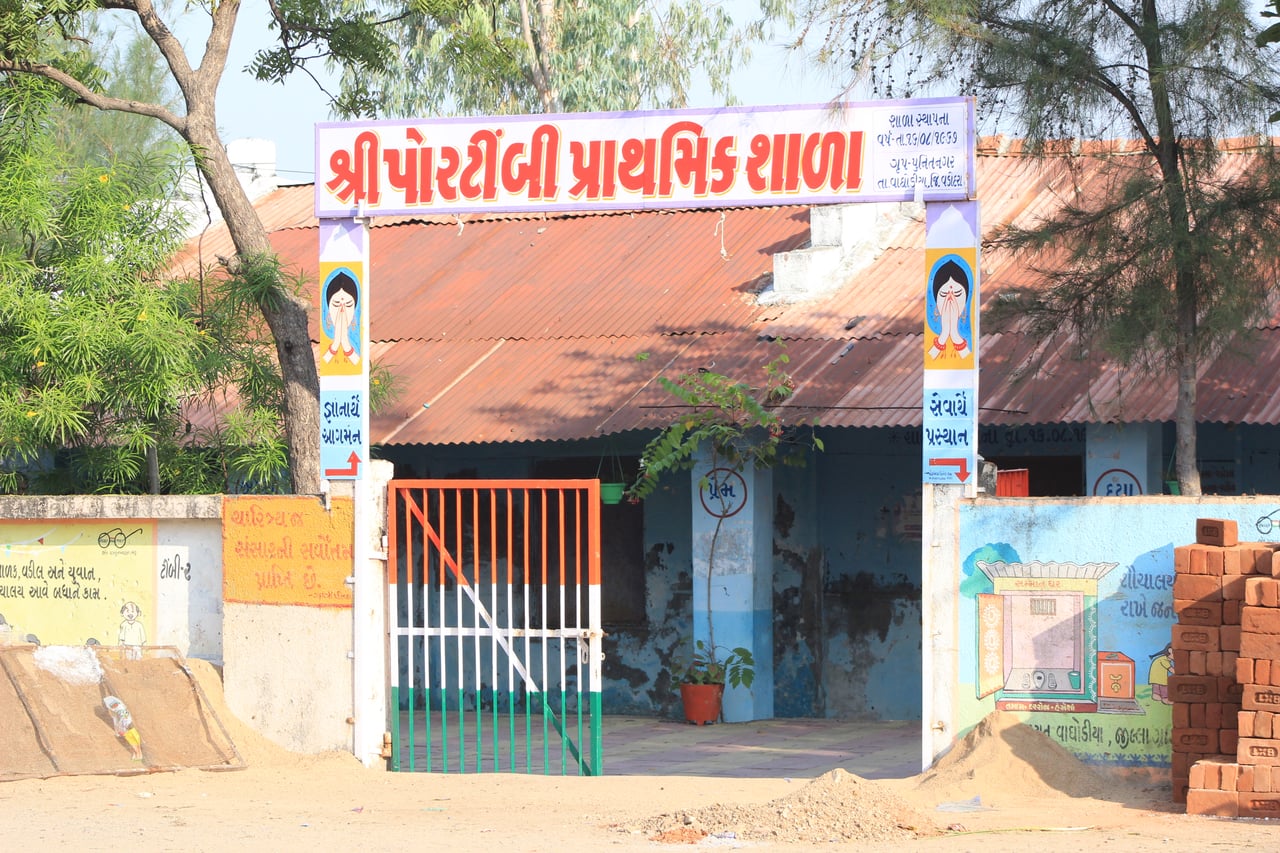
The entrance gate of Shri Por-Timbi Primary School in Vadodara district, Gujarat. Under Section 19 of the RTE Act, physical standards (including boundary walls, sanitation blocks, and barrier-free access) are legal prerequisites for a school to exist. Photo: Snehrashmi (CC BY-SA 4.0 via Wikimedia Commons)
Beyond the School Gate
Most parents believe their job is over when their child gets admission somewhere. That’s actually just the beginning. The Right to Education is not simply the right to walk through a school gate; it is the right to a school that meets a clear set of legal standards. Whether your child’s school meets that bar is another question, and one most families never get around to asking.
"Getting through the gate is the easy part. The harder question is what the law actually guarantees your child once they're inside."
What the Law Actually Says
Article 21-A of the Constitution guarantees free and compulsory education for every child between 6 and 14 years. Parliament made that promise enforceable through the Right of Children to Free and Compulsory Education Act, 2009, commonly known as the RTE Act that many parents have heard of, but few have had reason to read line by line.
The Act lays down three core rules that directly affect families:
- No child can be turned away: A school cannot deny admission for lack of birth certificates, late applications, or transfer paperwork.
- No child can be failed or expelled: Students cannot be held back or thrown out of school until they finish Class 8.
- 25% reservation in private schools: Private, unaided schools must reserve at least a quarter of their entry-level seats for children from economically weaker families, with the state reimbursing the cost.
The Facilities a School Is Legally Required to Have
This is the bit that catches most parents off guard: the RTE Act does not stop at admission. It regulates the school building itself. Under Section 19 and the Schedule to the Act, every elementary school must meet specific, non-negotiable physical norms:
The Section 19 Checklist: What Every School Must Have
- Pupil-Teacher Ratio: Maximum 30:1 for primary classes (1–5); 35:1 for upper-primary classes (6–8).
- Classrooms: An all-weather classroom for every teacher, plus an office-cum-store for the head teacher.
- Separate Toilets: Distinct, working, and clean toilets for boys and girls.
- Safe Drinking Water: Clean, tested drinking water available on the premises.
- Mid-Day Meal Kitchen: A dedicated kitchen shed where meals can be cooked cleanly and safely.
- Ramps & Access: Barrier-free access and handrail ramps for children with disabilities.
- Playground & Boundary Wall: An open play space and a complete boundary wall or fencing for child safety.
- Library: Books, newspapers, and age-appropriate reading material.
- Neighbourhood Distance: Primary schools must be within 1 km walking distance; upper-primary within 3 km.
If a school fails to provide these, Section 18 says it technically cannot be recognized. Private schools risk derecognition and fines. Government schools face mandatory compliance orders. Yet across many districts, schools continue operating without boundary walls or separate toilets because parents don't realize these are not optional perks; they are mandatory legal requirements.
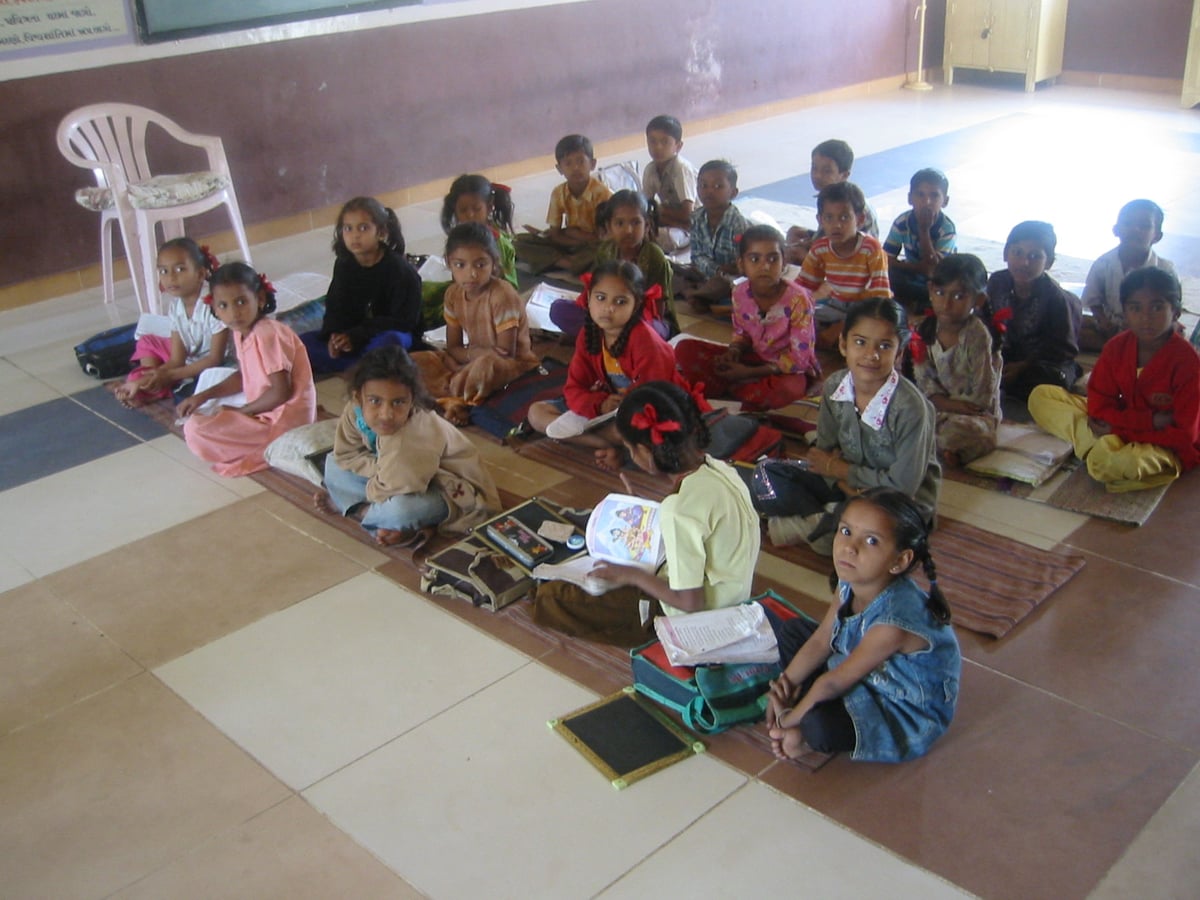
Inside a primary school classroom in Gujarat. Section 19 is clear: enrollment means little if there are 60 children crammed into a room built for 30. Photo: Yann Forget (CC BY-SA 3.0 via Wikimedia Commons)
“Sanctioned” and “Completed” Are Not the Same Thing
Here is where the bureaucratic sleight of hand happens. A government portal or taluka file showing that a toilet block or boundary wall has been 'sanctioned' tells you almost nothing about whether it actually exists.
Sanctioned simply means that the expenditure was approved and an official work order was sent out to a department or contractor. Completed means bricks are laid, water pipes work, and children can actually use the facility on a Monday morning.
Year after year, Comptroller and Auditor General (CAG) performance audits reveal the same story: money released on paper while the school ground remains empty. In some cases, funds sit unspent in bank accounts; in others, contractors abandon half-built walls.
This is where the Right to Information (RTI) Act, 2005 becomes a parent's most practical tool. You do not have to take the administration's word for it. Any citizen can file a simple Rs 10 RTI application asking for the sanction order, the contractor's measurement book, and the civil handover certificate for their local school.
Where This Leaves Us
A right on paper is only as good as the physical reality behind it. But that raises two harder questions: Who actually sets these standards in the first place? And who decides whether your school meets them, or gets a pass?
Coming Next
Read ahead: Part 2: Who Decides Your School's Standards? The Roles of RTE, NCERT, GCERT and the Gujarat Government
References & Official Documents
- Ministry of Education: Guidelines on Neighbourhood School Distance & Planning
- Press Information Bureau: RTE 25% Admission Provision & Guidelines
- Press Information Bureau: Norms for Primary & Upper Primary Schools
- Comptroller and Auditor General of India: Performance Audit on RTE Infrastructure Compliance
- Department of Personnel and Training (DoPT): RTI Online Portal