Who Decides Your School's Standards? The Roles of RTE, NCERT, GCERT and the Gujarat Government
Ask most parents who decides how many teachers a school needs, and you will get silence, a shrug, or “the government.” The real answer involves four separate bodies. Knowing which one is responsible for what determines whether your complaint goes anywhere.
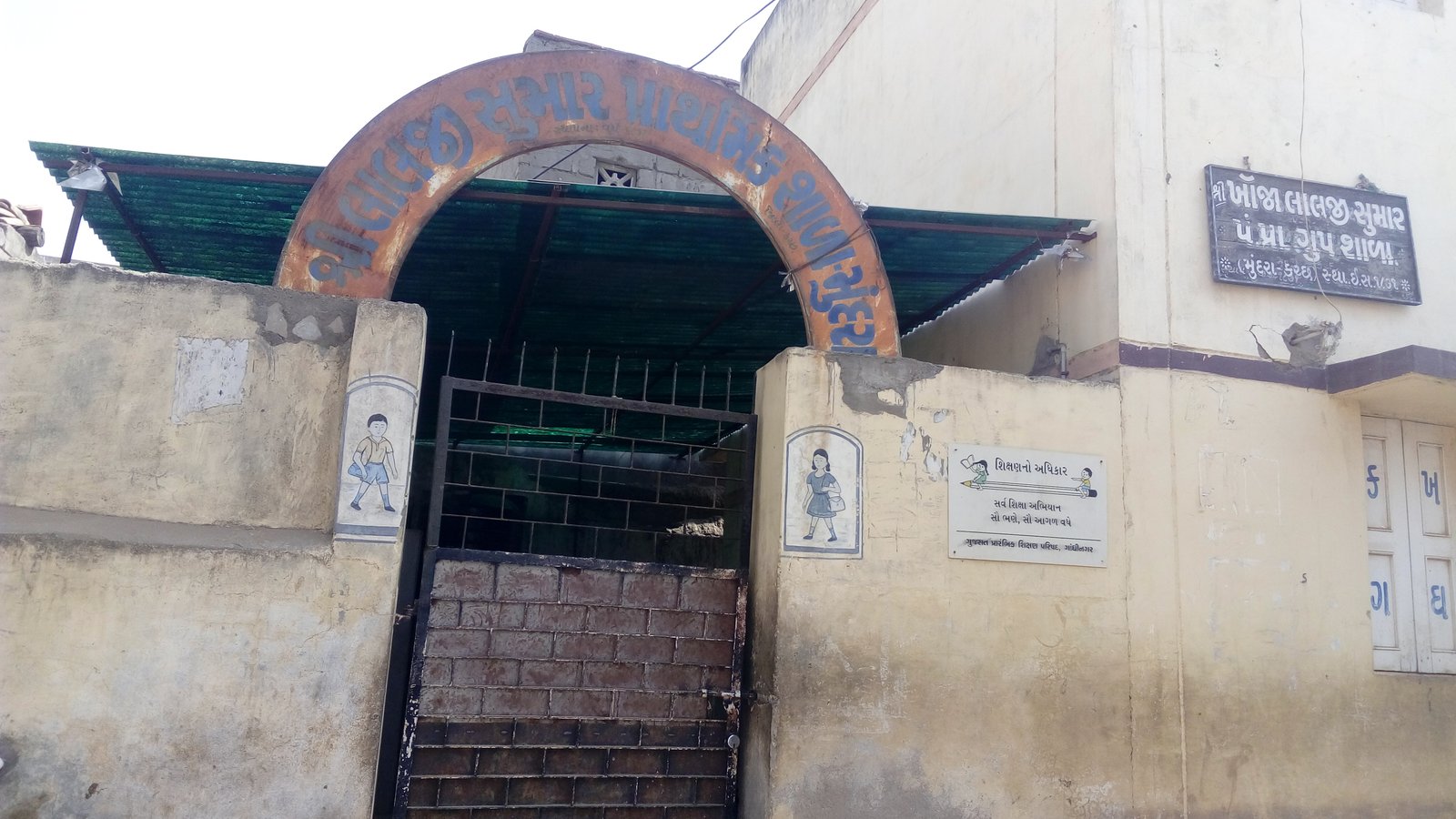
Khoja Lalji Sumar Primary School, Mundra, Kutch, Gujarat. The standards this school must meet are shaped by four distinct bodies at national and state level. Photo: Nizil Shah (CC BY-SA 3.0 via Wikimedia Commons)
A Committee of Four
No single ministry decides what your child's school looks like, how many teachers it employs, or what the syllabus covers. Four bodies share that responsibility, each operating at a different level with a different kind of power. When something goes wrong, each one can point at another. That is not an accident — it is what happens when national law, curriculum bodies, state boards, and real-time monitoring systems are each run by different agencies with different incentives.
When a school has the wrong teacher-student ratio, a parent can spend months writing letters to the wrong office. Not because no one cares — but because the parent sent it to the state board when the fix requires the District Education Officer.
The Four Layers
How the Four Bodies Divide Responsibility
- RTE Act (national law): Lays down mandatory infrastructure norms, teacher-student ratios, and admission guidelines — the bare minimum every school must meet.
- NCERT (national body): Develops the National Curriculum Framework and textbooks. Defines what is taught across the country.
- GCERT (state body): Adapts the NCERT framework into Gujarat-specific textbooks, teacher training programmes, and academic resources.
- State Education Board / Vidya Samiksha Kendra: Responsible for implementation — tracking attendance, teacher recruitment, and UDISE+ compliance through real-time data.
The RTE Act is a national law. It sets the floor: minimum infrastructure, teacher-student ratios, admission rules. Every school in India must meet it. The National Council of Educational Research and Training (NCERT) writes the National Curriculum Framework and the textbooks built on it — it decides what gets taught. The Gujarat Council of Educational Research and Training (GCERT) takes that national framework and produces Gujarat's own textbooks and teacher training programmes. Then the state education board is supposed to make it actually happen — which, since 2019, involves the Vidya Samiksha Kendra, a real-time school data portal that NITI Aayog has called the first of its kind in the country.
So the law sets the floor. NCERT sets the syllabus. GCERT localises it. The state board is supposed to monitor whether any of it is happening. That last step is where things typically break down.
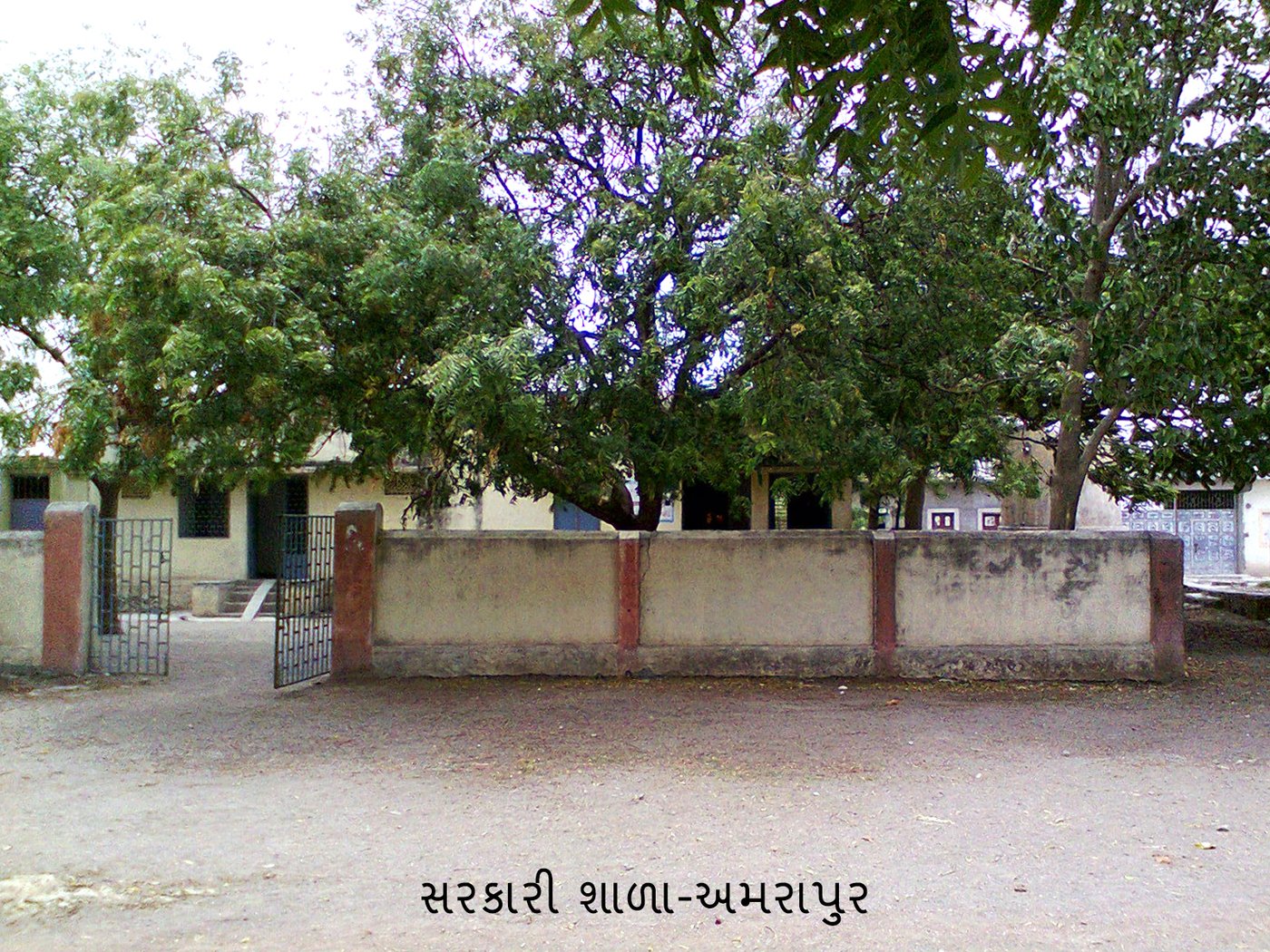
A government primary school in Amrapur village, Gujarat. The RTE Act determines the physical minimums; GCERT and the state board determine curriculum and staffing. Photo: Pratikborsadiya (CC BY-SA 3.0 via Wikimedia Commons)
What the Numbers Say About Gujarat Right Now
The government's own census of all schools in India — UDISE+ (Unified District Information System for Education Plus) — puts numbers to what people on the ground already know:
Gujarat by the Numbers — UDISE+ 2024–25
- 16.9% secondary dropout rate — among the highest in India, on par with Madhya Pradesh and Mizoram.
- 5.8% upper-primary dropout rate — affecting the Class 6–8 transition.
- Gross Enrolment Ratio for secondary education trails the national average.
- A significant number of schools operate with a single teacher.
- Some schools recorded zero enrolled students in the survey period.
A 16.9% secondary dropout rate across a state of 70 million people means hundreds of thousands of children leave before Class 10. That is also exactly where the RTE Act stops protecting them. The state-level average smooths over the variation between, say, Surat and Dahod — and for a family in Dahod, the state average is irrelevant.
The Practical Difference
Which body owns a decision determines where a complaint goes. Wrong teacher-student ratio? That is an RTE compliance failure — it goes to the District Education Officer, not the school principal. Out-of-date textbooks? That is a GCERT question. Attendance not tracked despite a working Vidya Samiksha Kendra connection? That is a state board failure. These are not variations of the same problem. They have different offices, different escalation paths, and different officials who can actually do something.
If your district's secondary dropout rate sits above the state average, you now have a specific question to put to your taluka education officer: why, and what has the block-level response been? That is a harder question to deflect than a general complaint about education.
Coming Up in Part 3
Next in the Series
There are standards on paper, and there is government data — but neither tells you whether a given school works on a daily basis. Read next: Part 4 — RTI: Your Tool for Getting the Real Facts About Your School