RTI: Your Tool for Getting the Real Facts About Your School
The Right to Education Act defines what children are entitled to on paper. The Right to Information Act is the legal mechanism that lets you verify whether those entitlements exist in reality. How a twenty-rupee application in Gujarat cuts through administrative evasion.
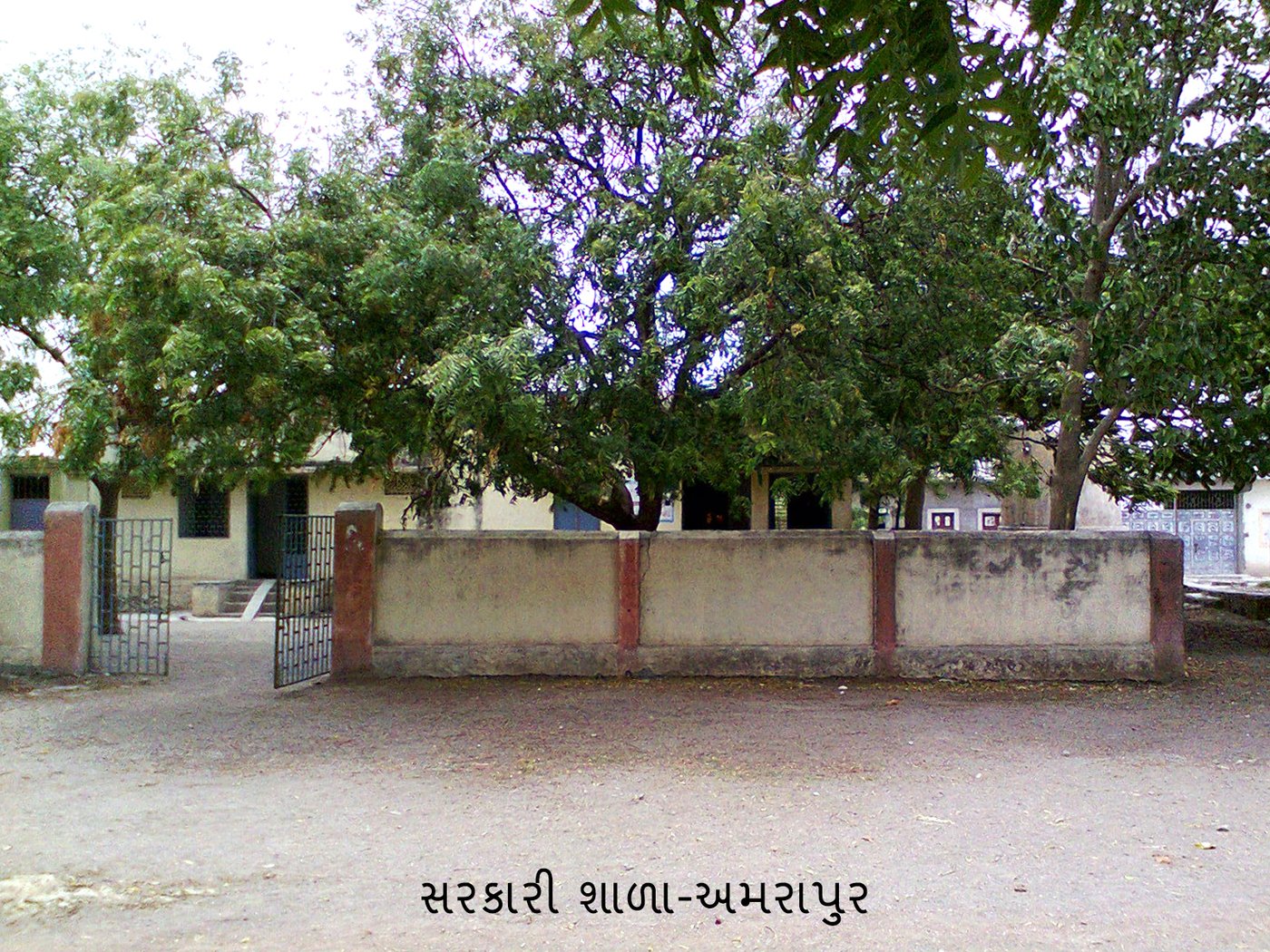
Primary School Amrapur, Jasdan Taluka, Rajkot District, Gujarat. Staffing numbers, meal grant spending, and sanitation work for any state-run primary school can be inspected under the RTI Act. Photo: Pratikborsadiya (CC BY-SA 3.0 via Wikimedia Commons)
Two Laws, Two Different Jobs
The Right to Education (RTE) Act tells parents what their child is legally entitled to: safe classrooms, working toilets, free textbooks, and a 30:1 student-to-teacher ratio. What RTE does not do is tell you whether the school down the road is actually providing any of it.
RTE creates the right. The Right to Information (RTI) Act, 2005 lets you verify whether anyone is honouring it. One law sets the standards; the other gives citizens legal power to inspect the government registers where performance and spending are recorded.
RTE tells you what should exist on paper. RTI lets you inspect the ledger to see whether the state paid for it, built it, or simply closed the file.
Most parents never file an RTI because they assume it requires a lawyer, an advocate's letterhead, or a trip to a district court. In reality, filing an RTI requires an application on plain paper, a twenty-rupee fee, and knowing which register to ask for.
The Mechanics: Sections, Fees, and Deadlines
The Right to Information Act is designed to be accessible to any citizen without legal representation. Under the law and the Gujarat RTI Rules, 2010, several statutory rules govern every application:
Key RTI Provisions Every Parent Should Know
- No Reason Needed (Section 6(2)): You do not need to explain why you want the records. You do not need to prove your child studies at the school. You only need to provide your name and contact address.
- Application Fee (Gujarat RTI Rules, 2010, Rule 3): The fee for state public authorities in Gujarat is ₹20 per application. It can be paid via court fee stamp, non-judicial stamp, demand draft, cash receipt, or online via onlinerti.gujarat.gov.in.
- 30-Day Response Window (Section 7(1)): The Public Information Officer (PIO) has 30 calendar days to provide the records or formally state why they are exempt under Section 8.
- 48-Hour Emergency Clause: If the requested information concerns the life or personal liberty of any person, the PIO must respond within 48 hours.
- First Appeal (Section 19(1)): If the PIO does not reply within 30 days or provides incomplete data, you have 30 days to file a First Appeal with the departmental First Appellate Authority (FAA) — typically the District Primary Education Officer (DPEO).
- Second Appeal (Section 19(3)): If the FAA fails to resolve the issue, you have 90 days to appeal to the Gujarat Information Commission (GIC) in Gandhinagar, which can fine defaulting officers ₹250 per day under Section 20.
Questions Worth Filing an RTI Over
RTI works when you request existing records, registers, and sanction orders. It does not work when you ask officials for opinions or debate policy. Here are six factual questions that reveal what is happening in a school:
Actionable RTI Queries for Government Primary Schools
- Sanctioned vs. Posted Teachers: "Provide the sanctioned strength of teachers for this school by grade and subject, and the actual number of regular and contractual teachers currently deployed."
- Enrolment vs. Staff Ratio: "Provide the total number of students currently enrolled in Classes 1 through 8, alongside the student-to-teacher ratio for each class as of the current academic term."
- Sanctioned vs. Constructed Civil Works: "Provide copies of the administrative sanction orders, disbursed amounts, and physical completion certificates for the school boundary wall, additional classrooms, and toilet repairs over the last three financial years."
- Mid-Day Meal (PM POSHAN) Ledger: "Provide the monthly expenditure ledger and food-grain allocation records for the PM POSHAN scheme at this school over the past 12 months, including records of any food safety inspections conducted."
- School Management Committee (SMC) Records: "Provide copies of the meeting minutes and parent attendance registers for all SMC meetings held during the last academic year."
- Dropout Rates and Reasons: "Provide the total number of children who withdrew or discontinued schooling from this institution in the preceding academic year, along with the recorded reasons in the school leaving register."
As covered in Part 1 of this series, an infrastructure project listed as sanctioned on a government dashboard does not mean it was ever constructed on the school grounds. An RTI request asking for the completion certificate and contractor payment voucher is how you establish whether the work actually happened.
What You Don't Need an RTI For
An RTI application triggers a 30-day statutory timeline and requires paperwork. Some issues can be verified immediately without filing an application:
Turn the tap: You do not need a government order to check if the school has running water. Walk in during school hours and check whether the tap works and whether the drinking water tank has been cleaned.
Check the library almirah: The RTE Act mandates library books in every school. You do not need an RTI to see if books are locked away in an almirah or actively circulated to children in the classroom.
Attend the SMC: Under Section 21 of the RTE Act, 75% of School Management Committee members must be parents. Talk to parent members to find out whether the SMC actually meets, whether meetings are announced, and whether parents are consulted before school maintenance grants are spent.
Use direct observation for the physical condition of the school. Save your ₹20 and your 30-day timeline for the records officials keep behind closed doors: fund disbursals, vendor invoices, sanctioned vacancies, and inspection reports.
Before the Final Part
An application on plain paper, twenty rupees, and thirty days. That is all the RTI Act requires. It does not ask you to navigate political patronage or master bureaucratic protocol. It only requires the determination to ask specific, factual questions on behalf of your community.
Next in the Series
Getting the facts on paper is only half the battle. Read next: Part 5 (Series Finale): Informed Citizens Build Accountable Schools.
References & Official Documents
- Gujarat RTI Online Portal & Gujarat RTI Rules, 2010 — Government of Gujarat
- Central Information Commission — RTI Act 2005 Official Text
- Gujarat Information Commission (GIC) — Gandhinagar
- Right to Education Act, 2009 — Department of School Education & Literacy
- UDISE+ School Infrastructure & Enrolment Portal