The Other Side of Gujarat's Education Story
Behind statewide enrolment drives, official records reveal high secondary dropouts, thousands of single-teacher schools, and severe sanitation deficits across Gujarat.
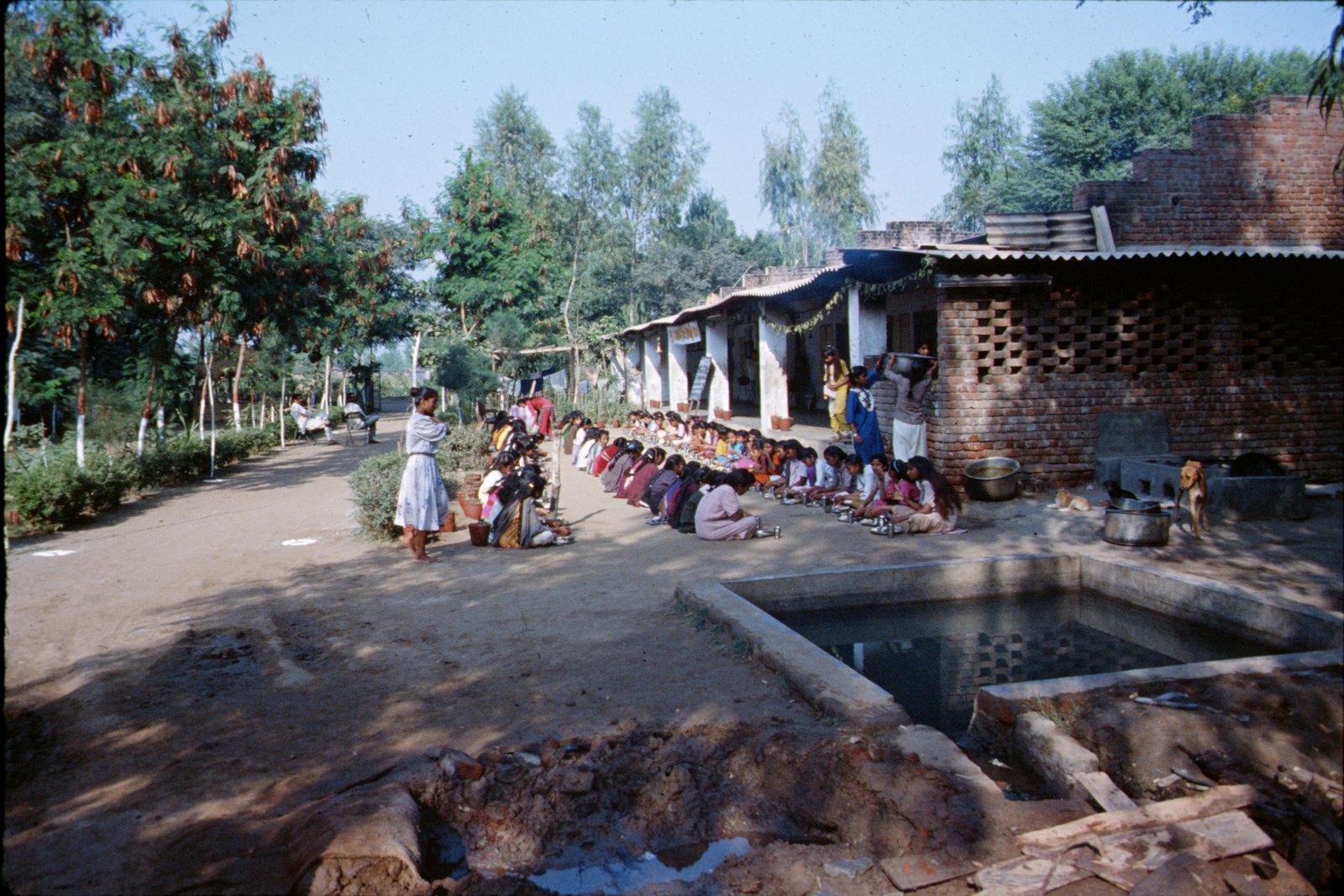
Students in a rural village school courtyard in Run, Kheda district, Gujarat. Official data collected under UDISE+ and the Project Approval Board records persistent gaps in classroom infrastructure, teacher availability, and sanitation across rural habitations. Photo: Yann Forget / Wikimedia Commons (CC BY-SA 4.0)
Gujarat operates tens of thousands of government schools. Official initiatives such as Shala Praveshotsav enrolment drives and Kanya Kelavani campaigns for girls have operated for years. Yet official records and ground reporting as of September 2026 show acute pressures across the state: secondary school dropouts, thousands of schools running with a single teacher, and incomplete basic facilities including toilets, drinking water, and electricity.
This report reviews verified records from the Project Approval Board (PAB) Gujarat, the central UDISE+ portal, and investigative field reporting. It distinguishes between administrative directives and confirmed physical corrections, noting where works remain pending verification.
Secondary School Retention and Dropout Rates
Retention at the secondary school level remains one of Gujarat's most acute educational challenges. Data reported from the Ministry of Education's UDISE+ 2025–2026 cycle placed Gujarat's secondary school dropout rate at 15.7%, compared to the national average of 9.5%. This elevated dropout figure placed Gujarat in the education ministry's "red" category for secondary school retention.
The scale of student departure is evident in administrative re-enrolment campaigns. Official reporting indicated that more than 6.41 lakh students had dropped out across 44,000 government and government-aided schools. While state authorities initiated intensive three-day drives to return children to classrooms, approximately 50,000 children remained unenrolled after the campaign concluded. Re-enrolment drives recover numbers temporarily, but thousands of older students continue to leave before completing Class 10.
Key State Education Metrics (UDISE+ & PAB Data)
- Secondary Dropout Rate: 15.7% in Gujarat versus the 9.5% national benchmark.
- Single-Teacher Primary Schools: 2,189 government institutions running with only one teacher.
- Single-Teacher Upper Primary: 119 upper-primary government schools staffed by one teacher.
- Adverse Student-Teacher Ratio: 21.2% of government schools exceeded statutory pupil-teacher limits in 2024–2025, up from 17.4% the previous year.
- Low-Enrolment Primary Schools: 4,403 government primary schools enroll fewer than 30 total students.
Single-Teacher Schools and Staffing Shortages
Staffing shortages directly affect daily instruction across rural and semi-urban clusters. The official minutes of the Project Approval Board (PAB) for Gujarat, dated 11 June 2026, documented 2,189 single-teacher primary schools and 119 single-teacher upper-primary schools based on 2024–2025 UDISE+ records.
The same PAB record noted that 21.2% of government schools had an adverse pupil-teacher ratio (PTR) during 2024–2025, an increase from 17.4% recorded in 2023–2024. In parallel, 4,403 government primary schools recorded total enrolments of fewer than 30 children. These figures create dual operational difficulties: small rural schools struggle to secure subject-specific teachers, while multi-grade classrooms force one educator to teach four different standards in a single room.
Sanitation, Water, and Utility Deficits
Physical infrastructure shortfalls persist across several thousand school compounds. A statewide UDISE+ survey of 53,425 schools in Gujarat found that 2,258 schools lacked separate, functional toilets for girls. Following this assessment, the state education department issued circulars requiring taluka-level inspections and repair estimates.
Minutes from the 11 June 2026 PAB meeting detailed further utility gaps across state-run institutions:
- Electricity Connections: 47 government schools lacked functional electrical connections.
- Drinking Water: 26 schools had no verified drinking water installations.
- Girls' Sanitation: 572 government schools required construction or restoration of girls' toilets.
- Boys' Sanitation: 663 government schools required boys' toilet blocks.
While central and state authorities ordered these deficiencies corrected, the official record does not confirm that all listed facilities have completed physical construction. Inspection orders demonstrate administrative awareness, but physical verification on the ground is required to confirm working taps and unlocked toilets.
Documented Institutional Cases
Statewide aggregates reflect broad trends, but specific administrative cases documented in press reports illustrate how operational breakdowns occur in individual talukas:
Specific Institutional Records
- Jamkhan Secondary School (Sabarkantha): In Vijaynagar taluka, the school's principal went unpaid for eight months due to service and processing delays following an appointment on 9 May 2025. The Commissioner of Schools issued a second show-cause notice to the Sabarkantha District Education Officer after initial administrative replies failed to resolve the salary disbursement.
- South Gujarat Monsoon Inundation: Heavy monsoon rains in late August and early September 2026 flooded primary school premises across South Gujarat, destroying learning materials and classroom furniture. The state authorized compensatory weekend classes and free textbook distributions to replace damaged materials.
- Government Samras Girls' Hostel (Surat): Students at this facility, affiliated with Veer Narmad South Gujarat University, organized public protests in September 2026 regarding contaminated mess food, water supply cuts, and poor sanitation. While university hostels operate under higher education bodies, not primary school directorates, the dispute reflects broader maintenance issues in public student residences.
Regional Overview and Evidence Gaps
School conditions vary significantly by geography across Gujarat's 33 districts:
- Central Gujarat and Ahmedabad: High overall enrolment numbers coincide with seasonal urban flooding and classroom congestion in peripheral industrial wards.
- North Gujarat: Staff deployment bottlenecks affect interior talukas, as illustrated by the unresolved administrative disputes in Sabarkantha.
- Saurashtra and Kutch: Coastal and arid talukas face low-density primary schools where fewer than 30 students attend, making full-time subject specialist staffing difficult to sustain.
- South Gujarat: Severe monsoon weather repeatedly damages physical infrastructure, requiring emergency book distributions and temporary repairs.
- Eastern Tribal Belt: Districts such as Dahod, Chhota Udepur, and Dang record substantial secondary dropout rates. Granular school-level audit data remains scarce for interior tribal habitations.
Categorizing Administrative Action
To avoid overstating problems or presuming that every departmental circular solves an issue, public evidence must be evaluated in four distinct categories:
Evidence Classification Framework
- Resolved: Verified only when documented evidence confirms physical completion of work. Few statewide infrastructure items currently meet this standard.
- Partially Addressed: Interim relief has been supplied, such as replacement textbooks after floods, while structural building repairs continue.
- Action Ordered: Departmental circulars or show-cause notices have been issued, but completion reports have not been independently validated.
- Unresolved or Update Pending: Issues where current reports show ongoing deficits, including the 15.7% secondary dropout rate and the Sabarkantha principal salary case.
Limits of Statewide Data Registries
A unified registry listing every specific defect in all 44,000 Gujarat government schools does not exist in public domain databases. The central UDISE+ database provides broad annual statistics. The Gujarat Education Department's Seva Samadhan Portal functions as an internal grievance mechanism for teacher service matters rather than a public defect register.
Because official dashboards rely on self-reported administrative submissions, physical citizen verification remains essential to identify padlocked toilets, dry water taps, and multi-grade single-teacher classrooms.
Concrete Verification Steps for Citizens
Parents, School Management Committee (SMC) members, and local residents can use three specific legal tools to inspect and improve their village school:
How to Audit Your Local School
- Inspect UDISE+ Data: Look up your school's 11-digit UDISE code on dashboard.udiseplus.gov.in to compare reported toilet and electricity facilities against physical reality.
- Review SMC Minutes: Request to view the annual School Development Plan under Section 21 of the Right to Education Act, which requires 75% parent representation.
- File an Online RTI Query: Use Gujarat's RTI portal (onlinerti.gujarat.gov.in) to request sanctioned maintenance grants and teacher vacancy records from the District Primary Education Officer (DPEO).
References & Official Documentation
- Minutes of the Project Approval Board (PAB) Meeting for Gujarat, 11 June 2026: Department of School Education & Literacy, Ministry of Education
- Unified District Information System for Education Plus (UDISE+) Official Dashboard
- Seva Samadhan Portal (SSP): Samagra Shiksha Gujarat
- Indian Express (22 July 2026): Gujarat Marked in Red Zone for Secondary School Dropouts
- Indian Express (15 July 2026): Over 6.4 Lakh Dropout Students Identified Across Gujarat Schools
- Indian Express (27 July 2026): UDISE Survey Finds 2,258 Gujarat Schools Lacking Functional Girls' Toilets
- Times of India (2026): Commissioner of Schools Issues Second Notice to Sabarkantha DEO Over Unpaid Principal
- Indian Express (Late August 2026): Heavy Monsoon Rainfall Disrupts Schooling in South Gujarat
- Times of India (September 2026): Free Textbooks and Compensatory Classes in Flood-Hit South Gujarat
- Indian Express Gujarati (2 September 2026): Protest at Samras Girls' Hostel in Surat Over Food and Sanitation